Kyoto Geisha Tea Ceremony: Traditional Matcha and Kimono Experiences
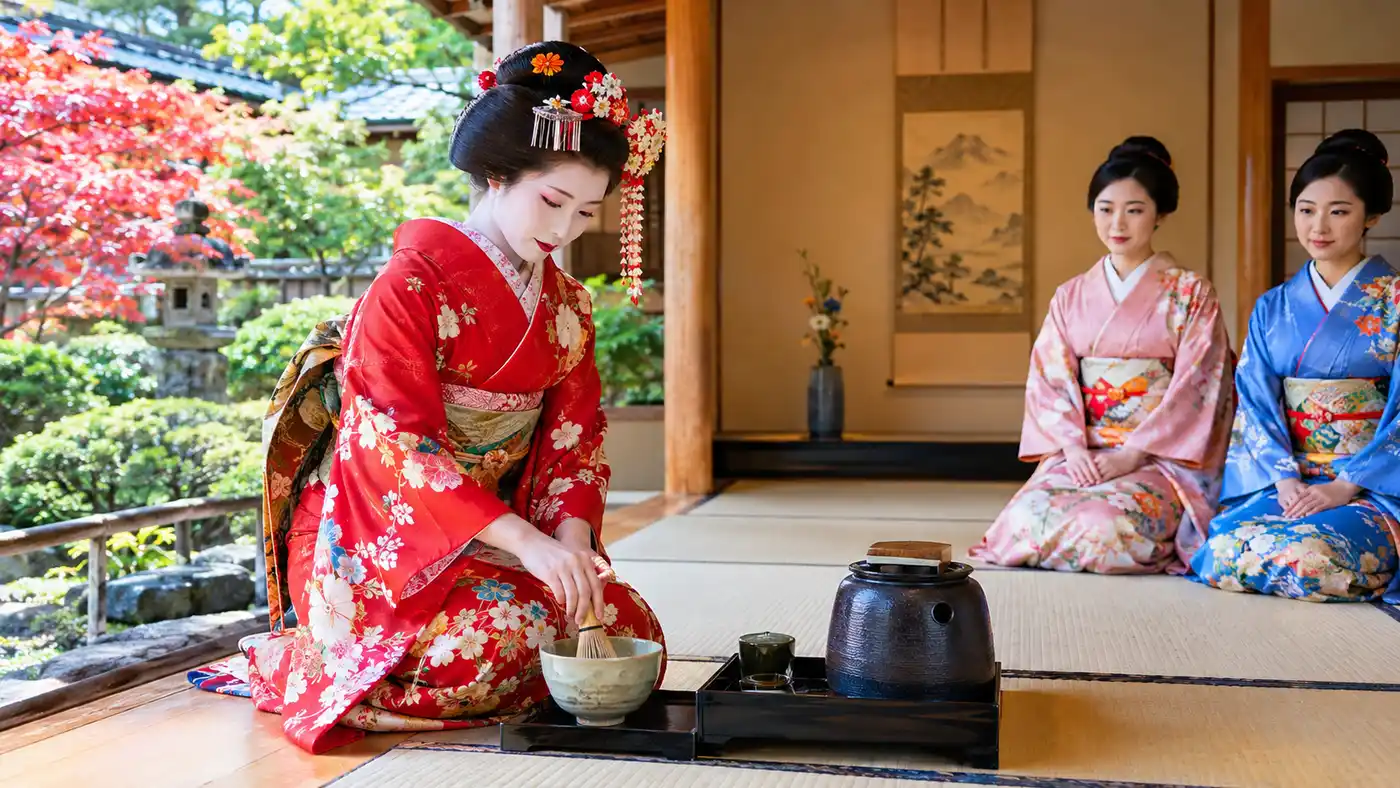
My knees gave up around minute eighteen. Sitting on woven tatami straw in the corner of a wooden teahouse in Miyagawacho, I realized nobody warned me about the pins and needles. Across the low table, an apprentice artist with powdered skin and trailing silk was whisking green foam in an unglazed ceramic bowl with pure composure. Experiencing a authentic geisha tea ceremony kyoto is equal parts aesthetic reverie and physical endurance test, but it ruins standard cafe green tea for you forever.
Most travelers come to the old capital hoping to glimpse this hidden world from across a crowded street. Arranging a proper tea ceremony in kyoto gives you something far more intimate: sitting in the same room, hearing the soft hiss of hot water ladled from iron kettles, and watching a woman who has spent years perfecting how to lift a bamboo scoop without spilling a single drop. It is slow, intentional, and remarkably grounding.
Book your geisha show kyoto experience:
The Living Art of a Maiko Tea Ceremony Kyoto
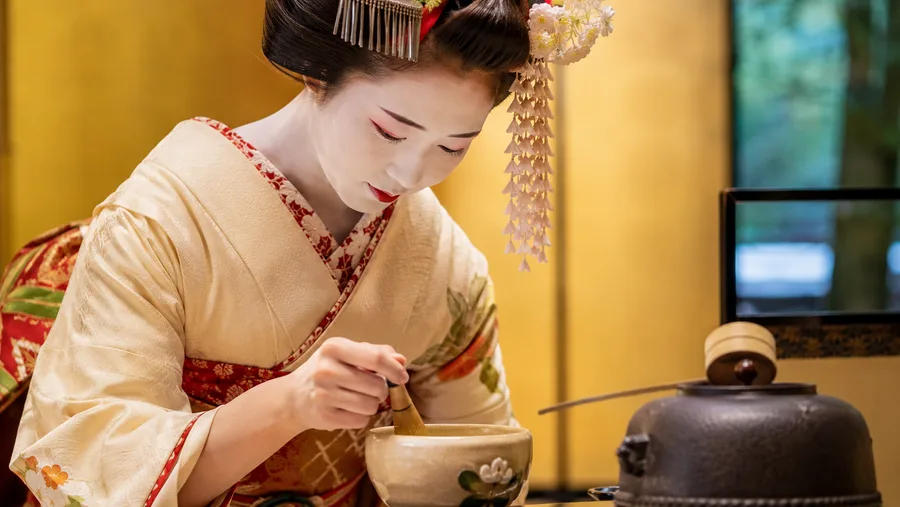
The room smells of sweet burning cedar wood, dry rushes, and rich, toasted green leaves. In Kyoto, people say geiko instead of geisha, while apprentice performers are known as maiko. If you attend a maiko tea ceremony kyoto, you will almost certainly be hosted by an apprentice rather than a senior artist. The differences between a geiko and an apprentice maiko show up instantly in their appearance: the apprentice wears long trailing sashes, heavy dangling hairpins that flutter when she tilts her head, and platforms that add three inches to her height.
Watching her work feels hypnotic. There is no idle chatter at first. The apprentice glides across the floorboards, sliding her white-socked feet along the woven mats without lifting them off the ground. She cleans the lacquered tea caddy with a folded silk cloth (fukusa), scoops fine emerald powder into an earthenware bowl, and ladles boiling water from a heavy iron kettle (kama).
Every flick of her wrist follows choreography established over four centuries ago. It feels almost sacred, though it is fundamentally an act of quiet hospitality.
Once the froth forms, she serves you a delicate seasonal sugar confection called wagashi. It balances the bracing bitterness of the tea. In small group gatherings, you get about 20 minutes afterwards to ask questions through a translator, take a couple of respectful portraits, and hear about her daily routine in the boarding house.
Kimono Tea Ceremony Kyoto: Robes, Tatami, and Etiquette
Slipping into traditional robes before whisking tea shifts your posture completely. When you sign up for a kimono tea ceremony kyoto experience, the dressing ritual alone takes about 25 minutes. A dresser wraps layer upon layer of cotton padding and stiff canvas around your midsection, finishing with an obi sash pulled firmly against your lower ribs. You cannot slouch. Your breath drops down into your belly, your stride shortens, and the quiet formality of the tea room suddenly makes complete physical sense.
Many outfitters sit tucked into the hillsides of Higashiyama. You walk in wearing sneakers and denim, pick a muted silk pattern from wooden hangers, and step out onto stone alleys feeling transformed.
Pro tip: Wear clean white socks or buy a pair of split-toe tabi socks at your rental shop, because bare feet are strictly forbidden on traditional tatami flooring.
Sitting on the floor while strapped into stiff fabric is an acquired skill. If your back aches or your hips lock up, do not suffer in silence. Many venues keep miniature wooden stools hidden behind sliding screens for foreign guests. Nobody will judge you for asking for one.
A complete kyoto tea ceremony with kimono package usually lets you keep the outfit for the rest of the afternoon. Wandering through temple gardens in traditional dress after drinking bitter tea gives you an entirely different perspective on the city.
Comparing Geisha Tea Ceremony Kyoto Options and Venues
Matching your expectations with the right experience saves you money and disappointment. A five-minute demonstration inside a souvenir market is not the same as an hour in a historic wooden parlor.
| Experience Type | Group Size | Average Cost | Key Inclusions | Best Suited For |
|---|---|---|---|---|
| Shared Maiko Tea Gathering | 8 to 15 guests | ¥11,000 - ¥16,000 | Tea preparation, wagashi, short dance, shared Q&A | First-time visitors wanting photos and culture |
| Private Ochaya Experience | 1 to 4 guests | ¥45,000 - ¥85,000 | Exclusive teahouse access, geiko host, translator | Special occasions, photography, deep discussion |
| Tea Master & Kimono Session | 4 to 8 guests | ¥5,500 - ¥9,000 | Kimono hire, tea whisking lesson, historic teahouse | Hands-on learners focused on the tea ritual itself |
| Public Festival Tea (Odori) | 50+ guests | ¥4,000 - ¥6,500 | Quick mass seating, ceramic plate keepsake, theater ticket | Spring and autumn theatergoers on tight schedules |
Prices fluctuate depending on season. Spring cherry blossom weeks and late November foliage seasons push rates higher, and time slots fill up three months ahead of time.
If you want pure intimacy, nothing beats an authentic geisha tea house booking arranged through a boutique agency or luxury hotel concierge. For budget-conscious travelers, shared workshops provide roughly 80 percent of the cultural context at a quarter of the expense.
Book your geisha show kyoto experience:
Tea Ceremony Gion Kyoto: The Best Neighborhoods and Tea Houses
Location shapes the mood of your afternoon. The historic core of Gion Kobu and Miyagawacho contains the highest concentration of registered teahouses (ochaya). Wandering these flagged lanes around 5:00 PM feels magical as lantern lights flicker on against dark timber facades.
Before heading out, it pays to check where to spot geisha in Kyoto's preservation zones, particularly because strict local ordinances now protect residential alleys from wandering sightseers.
Note: Snapping photos of geiko or maiko on private side streets in Gion carries a ¥10,000 fine, so keep cameras tucked away until you are inside your reserved teahouse.
Finding a venue that balances heritage with foreign hospitality requires careful selection. You want authentic surroundings without feeling unwelcome.
- Look for preserved architecture: Choose teahouses set inside registered machiya townhouses featuring small moss gardens (tsuboniwa) and paper shoji screens.
- Check interpreter credentials: Ensure your booking explicitly includes an English-speaking host or guide, as working geiko rarely speak conversational English.
- Review the seating policy: If you cannot sit flat on the floor for 45 minutes, verify that low wooden stools (zaisu) are readily available upon request.
- Confirm photography allowances: Clarify whether cameras are permitted throughout the ritual or only during the dedicated conversation window at the end.
Smaller enclaves like Kamishichiken, located near Kitano Tenmangu shrine in northwestern Kyoto, offer far quieter surroundings than Gion. It is the oldest geisha district in the city, and the teahouses there feel less commercialized.
Step-by-Step Etiquette for a Traditional Tea Ceremony in Japan
Foreigners often worry about making an embarrassing mistake during the ritual. Hosts know you are a newcomer. The etiquette behind a traditional tea ceremony in japan is built on mutual respect, not catching visitors out on minor technicalities.
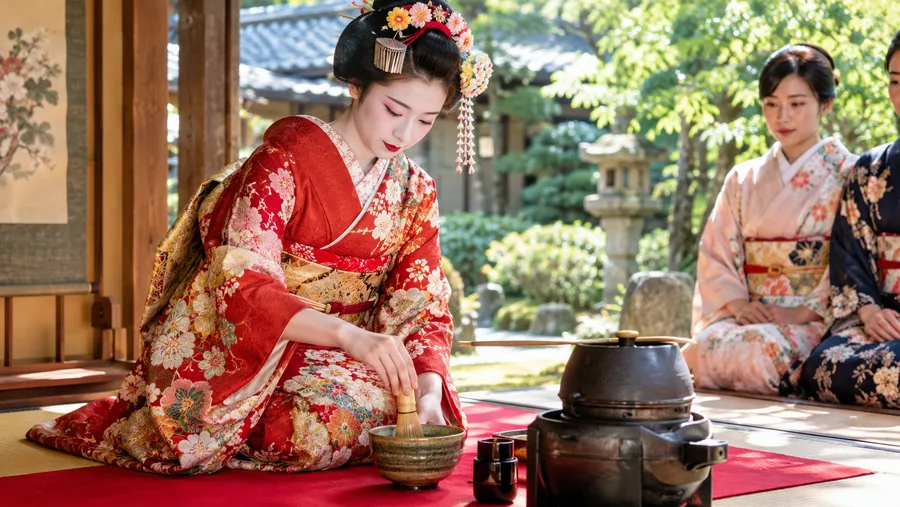
The ritual follows principles formalized by the great 16th-century tea master Sen no Rikyu: harmony, respect, purity, and tranquility. Everything follows a sequence designed to slow your racing thoughts.
When the host slides the small ceramic plate containing the wagashi sweet across the tatami, bow your head slightly in recognition. Eat the sweet completely before drinking your tea. The heavy sugar coats your tongue, preparing your tastebuds for the bold bitterness of high-grade ceremonial matcha.
- Receiving the ceramic bowl: Accept the bowl with your right hand, place it firmly in your left palm, and bow your head slightly to thank the maker.
- Admiring the decorative face: Rotate the bowl clockwise twice in your hands by about 90 degrees so your lips do not drink directly from the painted main artwork.
- Drinking the green foam: Sip the matcha in three or four steady drafts, keeping both hands steady around the curved pottery.
- Signaling you have finished: Inhale the final sip with a short, audible slurp, which politely tells the host that the bowl is empty.
- Inspecting the pottery: Wipe the edge clean with your thumb, rotate the vessel counterclockwise twice, lower it close to the tatami mat, and examine the glaze and foot of the bowl.
That final slurp feels counterintuitive to Western travelers. In a Japanese tea room, it is a compliment to the host, proving you enjoyed every drop.
Frequently Asked Questions about geisha tea ceremony kyoto
How much does a geisha tea ceremony in Kyoto usually cost?
A shared group session with a maiko costs between ¥11,000 and ¥16,000 per person. Private teahouse bookings start around ¥45,000 and can easily reach ¥85,000 depending on group size and translation services.
Can foreigners book a traditional geisha tea house directly?
Most historic ochaya teahouses operate under an introduction-only policy (ichiminsan okowari). Independent travelers must book through cultural tour operators, registered kimono studios, or high-end hotel concierges.
What should I wear if I do not rent a kimono?
Wear clean, modest clothing with modest necklines and pants or skirts that cover your knees when seated on the floor. Always bring clean white socks, as bare feet are considered disrespectful on tatami mats.
Is the matcha served during the ceremony very bitter?
Ceremonial matcha has a sharp, grassy profile with a lingering savory flavor (umami). The seasonal wagashi sweet eaten right before drinking tempers the bitterness perfectly.
How long does the entire experience take?
Most standard tea ceremonies last 45 to 60 minutes. If you add kimono dressing, hair styling, and photo time in the garden, budget at least two to three hours.
Quick Reference
- Duration: 45 to 90 minutes
- Typical cost: ¥11,000 to ¥16,000 shared
- Main districts: Gion Kobu, Miyagawacho, Kamishichiken
- Footwear requirement: Clean white socks required
- Booking window: 4 to 8 weeks in advance
Book your geisha show kyoto experience:
The Bottom Line
You can drink matcha anywhere in Japan, from temple gift shops to vending machines on train platforms. Sitting across from an apprentice who has dedicated her youth to traditional arts is something entirely different. It grounds you in a Kyoto that exists beneath the neon signs and bus terminals. Make the reservation, endure the tight kimono and aching knees, and let the quiet rhythm of the bamboo whisk wash over you.
Read more about geisha show kyoto.